Tell me more ×
Physics Stack Exchange is a question and answer site for active researchers, academics and students of physics. It's 100% free, no registration required.

In history we are taught that the Catholic Church was wrong, because the Sun does not move around the Earth, instead the Earth moves around the Sun.

But then in physics we learn that movement is relative, and it depends on the reference point that we choose.

Woulnd't the Sun (and the whole universe) move around the Earth if I place my reference point on Earth?

Was movement considered absolute in physics back then?

PS: I'm not religious

share|improve this question
Historian are not physicists. Why would you search physic in history books? on the other hand physics wants to be absolute in some sense (read answer of physics.stackexchange.com/questions/10078/…) Theory of Relativity, is a physics theory and (besides it works pretty well) it has in its assumptions a constant light speed and the principle of relativity "physics is the same for any frame of reference" , as long as measures fit, we can suspect that perhaps those premise are not so bad. – HDE Jun 9 '11 at 12:15
In classical physics there is the notion of an inertial frame of which the sun is a good approximation generally, and the earth only sometimes. It all depends on what you want to measure in the first place. – ja72 Jun 9 '11 at 13:40
Actually the entire universe rotates about me - but nobody else seems to see that! – Martin Beckett Aug 26 '12 at 20:54

11 Answers

Imagine two donut-shaped spaceships meeting in deep space. Further, suppose that when a passenger in ship A looks out the window, they see ship B rotating clockwise. That means that when a passenger in B looks out the window, they see ship A rotating clockwise as well (hold up your two hands and try it!).

From pure kinematics, we can't say "ship A is really rotating, and ship B is really stationary", nor the opposite. The two descriptions, one with A rotating and the other with B, are equivalent. (We could also say they are both rotating a partial amount.) All we know, from a pure kinematics point of view, is that the ships have some relative rotation.

However, physics does not agree that the rotation of the ships is purely relative. Passengers on the ships will feel artificial gravity. Perhaps ship A feels lots of artificial gravity and ship B feels none. Then we can say with definity that ship A is the one that's really rotating.

So motion in physics is not all relative. There is a set of reference frames, called inertial frames, that the universe somehow picks out as being special. Ships that have no angular velocity in these inertial frames feel no artificial gravity. These frames are all related to each other via the Poincare group.

In general relativity, the picture is a bit more complicated (and I will let other answerers discuss GR, since I don't know much), but the basic idea is that we have a symmetry in physical laws that lets us boost to reference frames moving at constant speed, but not to reference frames that are accelerating. This principle underlies the existence of inertia, because if accelerated frames had the same physics as normal frames, no force would be needed to accelerate things.

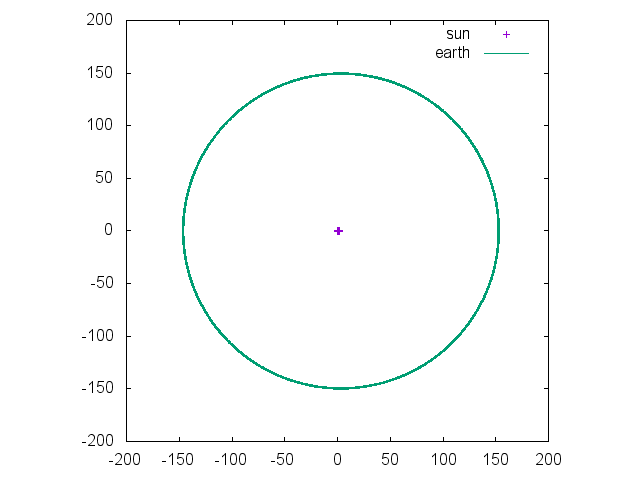
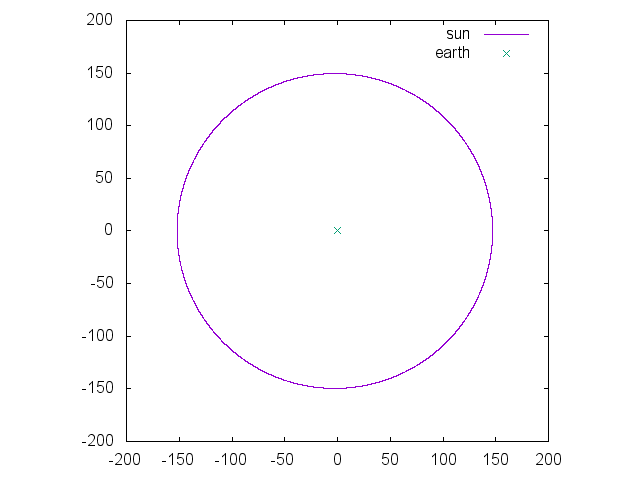
For the Earth going around the sun and vice versa, yes, it is possibly to describe the kinematics of the situation by saying that the Earth is stationary. However, when you do this, you're no longer working in an inertial frame. Newton's laws do not hold in a frame with the Earth stationary.

This was dramatically demonstrated for Earth's rotation about its own axis by Foucalt's pendulum, which showed inexplicable acceleration of the pendulum unless we take into account the fictitious forces induced by Earth's rotation.

Similarly, if we believed the Earth was stationary and the sun orbited it, we'd be at a loss to explain the Sun's motion, because it is extremely massive, but has no force on it large enough to make it orbit the Earth. At the same time, the Sun ought to be exerting a huge force on Earth, but Earth, being stationary, doesn't move - another violation of Newton's laws.

So, the reason we say that the Earth goes around the sun is that when we do that, we can calculate its orbit using only Newton's laws.

In fact, in an inertial frame, the sun moves slightly due to Earth's pull on it (and much more due to Jupiter's), so we really don't say the sun is stationary. We say that it moves much less than Earth.

(This answer largely rehashes Lubos' above, but I was most of the way done when he posted, and our answers are different enough to complement each other, I think.)

share|improve this answer
2  
In Your 1st paragraph You should define what rotation is meant.(Around which axis) The donut shape of the craft lures me to think of rotation about the donuts symmety axis. – Georg Jun 9 '11 at 9:43
3  
@Georg That is what I meant. – Mark Eichenlaub Jun 9 '11 at 14:24
A much more scientifically correct answer that Lubos', imho. Thanks for posting it. – KPM Jan 11 at 22:49

yes, you may describe the motion from any reference frame, including the geocentric one, assuming that you add the appropriate "fictitious" forces (centrifugal, Coriolis, and so on).

But the special property of the reference frame associated with the Sun - more precisely, with the barycenter (center of mass) of the Solar System, which is just a solar radius away from the Sun's center - is that this system is inertial. It means that there are no centrifugal or other inertial forces. The equations of physics have a particularly simple form in the frame associated with the Sun. $$ M_1 d^2 / dt^2 \vec x = G M_1 M_2 (\vec r_1-\vec r_2) / r^3 + \dots $$ There are just simple inverse-squared-distance gravitational forces entering the equations for the acceleration. For other frames, e.g. the geocentric one, there are many other inertial/centrifugal "artificial" terms on the right hand side that can be eliminated by going to the more natural solar frame. In this sense, the heliocentric frame is more true.

share|improve this answer
5  
@Lubosh: "In this sense, the heliocentric frame is more true." I don't agree with the phrasing of this statement - it is more convenient perhaps, but it is equally as 'true' as any other choice of reference frame. If the geocentric equations of motion correctly predict the motion of all celestial bodies then surely they too are 'true,' albeit a little more complicated. – qftme Jun 9 '11 at 9:24
5  
@qftm: little more complicated? By choosing arbitrary coordinates you can get arbitrarily huge complexity in description! On the other hand, there is a certain minimum bound on complexity you can achieve in certain nice systems and this minimum is attained precisely in inertial frames. So, yes, these frames are natural and canonical. I don't find anything strange in Luboš's formulation. – Marek Jun 9 '11 at 13:14
2  
@Marek: Complexity of the equations isn't really the issue here. I was merely contending the use of the phrase "more true". In that I thought 'more convenient', 'more sensible' or 'a more natural choice' would be a more physically correct statement. – qftme Jun 9 '11 at 13:34
5  
Fine, @qftme, but you may make any statement in science equally relative. For example, one may describe the origin of species by God creating the world 6,000 years ago including all the fossils whose distribution happened to be dictated by the same patterns as if the fossils were leftovers from some insanely long pre-genesis history of literally billions of years. Both models are by construction equivalent. It follows that creationism is on par with evolution, doesn't it? ;-) Well, it's not. In science, if one may undo a simple transformation to get a more uniform description, one does it. – Luboš Motl Jun 9 '11 at 15:12
1  
š I "replied" in another answer. I hope this is the most productive way to participate in the conversation. physics.stackexchange.com/questions/10933/… – AlanSE Jun 13 '11 at 4:14

This was going to be a comment on Luboš Motl's answer, but it would be more appropriate as a full answer now.

His answer says: Laws of physics can be written more simply for the solar system's center of mass (barycenter) than for a point on Earth (geocentric).

Just one thing! One mustn't neglect the non-idealities of the barycenter itself, which has a location in the Milky Way that biases it gravitationally at least. On the surface this is splitting hairs, but the greater point is that the idealness of any reference frame is also relative, and no "ultimate" frame exists.

Likewise, choosing a point on the skin of an elephant over a geocentric point is sacrificing universality just as much as choosing a geocentric point over the barycenter is. To a flee however, consideration of physics formulated at a point beyond the surface of the elephant may be just "academic". Sound familiar?

share|improve this answer

Yes, the proposition: "the sun moves around the earth" had the earth immobile. This suited the theology of the times which was completely anthropocentric and that is why it prevailed over other theories coming from antiquity, like Aristarchos', who had a heliocentric proposal.

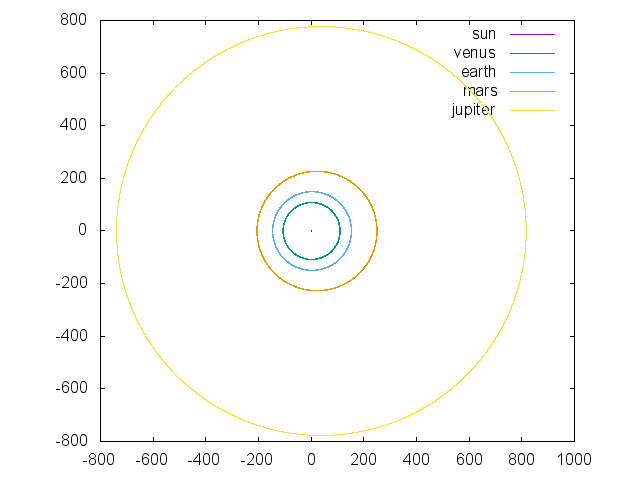
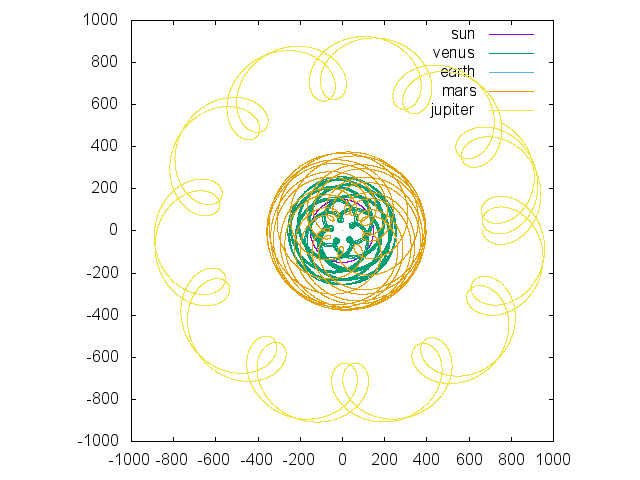
The relativity of motion was explored, as Lubos describes, when equations could be written down, and one chooses the heliocentric for its beauty and simplicity. The epicycles exist if one plots the solutions in a geocentric system, but they are so cumbersome and "ugly" as a shorthand of physics.

share|improve this answer
Well, epicycles are just a form of describing motion as a superposition of circular orbits, so something like a simple representation in Fourier space -- indeed Copernicus used them in his original heliocentric theory to compensate the eccentricity of orbits. – mbq Jun 9 '11 at 7:06
3  
@Mark: Great video-link. :: chuckles :: – qftme Jun 9 '11 at 9:38
@Mark and @mbq the video was fun, but do keep in mind that the epicycles appear as solutions of the graviational equations anyway, when they are transformed to the geocentric system, one to one correspondence. It is not an approximation. I first became clear of this when discussing planetarium models, and somebody who had a program for the solar system, showed the epicycles by changing the coordinate system. – anna v Jun 9 '11 at 10:28
@annav An an experimentalist, surely you can appreciate the good reason everyone had for not accepting heliocentrism. It had nothing to do with theology, as the Greeks themselves rejected Aristarchos well over 2000 years ago, noting that his theory made a prediction - stellar parallax - which was simply not observed. Theoretically, heliocentrism only made sense after Newton, who himself came after Galileo and Copernicus, and experimentally it was only directly confirmed in the early 19th century. – Chris White Feb 26 at 8:17
show 1 more comment

There may be a confusion : it is wrong to say that the Earth is the centre of the Universe, that is, the (unique) point from which the Universe is to be (fundamentally) described (the fact that the Sun turns around the Earth is only a consequence of this) ; what actually matters is that there is no centre of the Universe : there is no such point ; the description of the Universe from any point is equivalent to the description of the Universe from any other (then you are allowed to describe motions either from the Earth or from the Sun).

Mathematically, in classical mechanics, the Universe is said to be an affine space.

share|improve this answer

Both Sun and Earth move in circles around their barycenter i.e. centre of mass.

The trick is that since Sun is too massive, the center of mass is too close to the sun, actually beneath the surface of the Sun, which makes the motion of Sun negligible. And, we say that Earth moves around the Sun.

share|improve this answer

The sun, moon, earth (and so on) all move around each other.

The reason we say the earth moves around the sun is because the effects are more visible on a macro scale, and easier to predict with reasonable precision. Yes, it's most correct to say that all motion is relative, but it gets a lot more complicated to explain it if you're speaking to a layman.

share|improve this answer
Actually, ‘move around each other’ is a misleading phrase. They don't move around each other (in the sense, the Sun moves around the Earth and the Earth moves around the Sun), they move around their barycentre. Caution about language-induced pitfalls! – KPM Jan 11 at 22:53

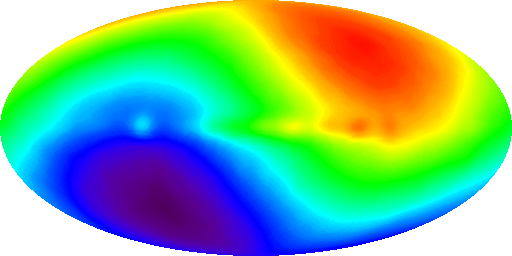
There are experimental evidences of absolute motion of the Earth around the Sun. There is a dipole anisotropy in fine measures of the Background Radiation temperature that is known from the analysis of the COBE satellite measures, in the early 90s. See for instance this paper.

In order to make the adequate corrections, so that the Cosmic Background Radiation "seems" isotropic, the absolute velocity of the Local Group against the Cosmic Background Radiation must be accounted for, but that correction depends on the month of the year, because a small part of the correction comes from the orbital speed of the Earth around the barycentre of the Solar System (among other terms).

That small part of the corrections needed is exactly what you would expect if you assumed that is the Earth who is going around the Sun, and not vice versa.

image from map.gsfc.nasa.gov

(the cosmic background dipole anisotropy, image from map.gsfc.nasa.gov)

Here is an extract from the abstract of the quoted paper:

We present a determination of the cosmic microwave background dipole amplitude and direction from the COBE Differential Microwave Radiometers (DMR) first year of data (...) The implied velocity of the Local Group with respect to the CMB rest frame is $v_{LG}=627 \pm 22 km s^{-1}$ toward (...). DMR has also mapped the dipole anisotropy resulting from the Earth's orbital motion about the Solar System barycenter, yielding a measurement of the monopole CMB temperature (...) $T_0=2.75 \pm 0.05 K$

This doesn't mean however, that there is an absolute reference frame in the Universe. Other comoving observers will detect another dipole anisotropy. The Last Scattering Surface, as well as the cosmological horizons are different for different comoving observers. But nevertheless it proves that it is the Earth that moves around the Sun, and not vice versa. Since the 90s this is no more a philosophical issue: WE are going certainly, absolutely, surely and gloriously, around the Sun.

share|improve this answer
Now, since there are two answers from users with several thousands points reputation, nobody dares voting this answer, despite the links and the easy underlying reasoning. Yeah, I love the human nature! – Eduardo Guerras Valera Feb 26 at 3:55
The argument given by Luboš is essentially the same as Copernicus, namely that the calculations are much simpler for a Sun-centred reference frame. I am talking however about a very different concept, this is an observational evidence, for the first time in history, but it has not yet transcended to the general public or even to scientist of other branches, because it was eclipsed by the confirmation of the Big Bang, that happened too because of the COBE measures of the CMB spectrum. – Eduardo Guerras Valera Feb 26 at 4:50
Nobody has paid attention to the philosophical implications of the orbital terms in the CMB dipole correction, but in essence, it is the first empirical confirmation in centuries, that Copernicus was right, independent of Occam's Razor or any other reasoning. It makes no practical difference, but philosophically it is very deep. – Eduardo Guerras Valera Feb 26 at 4:56
The statement it is the Earth, not the Sun, that moves with respect to the background stars was already shown observationally in 1838 (I think that's the year) with stellar parallax. Thus the CMB evidence is most profound only for those who believed the stars were conspiring to imitate motion in an annual cycle, but that the surface of last scattering can be trusted to not have yearly motion of its own. – Chris White Feb 26 at 8:25
Well, 1838 is the date given in Carrol & Ostlie for Bessel's first parallax measure, but it is only a bunch of very nearly stars until photographic plates in the first years of the XX century were used. In any case, yes, stellar parallax is another evidence, but the question is that whoever believed the outer planets going around the Sun and the Sun going around the Earth, would probably have no trouble adding nearby stars too, and the CMB is sort of a global evidence, it is the whole Universe, and that makes a philosophical difference: to consider the whole universe going around the Earth – Eduardo Guerras Valera Feb 26 at 8:34
show 3 more comments

In ancient times, the mechanics of orbital motion due to gravitational attraction wasn't known. What was known, though, was that if Earth orbits Sun, then stars would display a cyclical motion called "parallax." The Greeks actually predicted this, but didn't have the technology to observe it. This was a main reason the geocentric solar system model stood for so long. The parallax is real though, and observable, and provides direct observational evidence that Earth orbits Sun.

share|improve this answer

Every experiment ever designed to detect the motion of the Earth has failed to detect earth's motion and/or distinguish it from relative counter motion of the Universe. The Michelson-Morley experiment for one: http://2.bp.blogspot.com/-_17XBXum_q4/TrNpb9tJ2sI/AAAAAAAAC8M/CgXR1PXr6do/s1600/392959_xlarge.jpg Additionally There was a group of early "scientists" that decided that their heliocentric pronouncements would be proved and accepted. They conducted various experiments to prove that the earth moves around the sun. Unsurprisingly, these experiments FAILED--and they knew it--but they covered this information up. False science could not and can not prove the motion of the earth. Those early false scientists are the authors of the textbooks that today's "scientists" and authors consult. – The Michelson-Gale experiment (Reference - Astrophysical Journal 1925 v 61 pp 140-5 - I forgot to put this reference in) This detected the aether passing the surface of the earth with an accuracy of 2% of the speed of the daily rotation of the earth! Thus, the Michelson-Morely experiment detected no movement of the earth around the sun, yet the Michelson-Gale experiment measured the earth's rotation (or the aether's rotation around the earth!) to within 2%! This surely speaks volumes for geocentricity. "Airey's failure" (Reference - Proc. Roy. Soc. London v 20 p 35). Telescopes have to be very slightly tilted to get the starlight going down the axis of the tube because of the earth's "speed around the sun". Airey filled a telescope with water that greatly slowed down the speed of the light inside the telescope and found that he did not have to change the angle of the telescope. This showed that the starlight was already coming in at the correct angle so that no change was needed. This demonstrated that it was the stars moving relative to a stationary earth and not the fast orbiting earth moving relative to the comparatively stationary stars. If it was the telescope moving he would have had to change the angle. The Sagnac experiment (Reference - Comptes Rendus 1913 v157 p 708-710 and 1410-3) Sagnac rotated a table complete with light and mirrors with the light being passed in opposite directions around the table between the mirrors. He detected the movement of the table by the movement of the interference fringes on the target where they were recombined. This proved that there IS an aether that the light has to pass through and this completely destroys Einstein's theory of Relativity that says there is no aether. It is for this reason that this experiment is completely ignored by scientists. More recently Kantor has found the same result with similar apparatus. All these experiments are never taught at universities, so consequently, scientists, and students are ignorant of this evidence for geocentricity. In order to save the dying heliocentric theory from the conclusive geocentric experiments performed by Michelson, Morley, Gale, Sagnac, Kantor and others, establishment master-mind Albert Einstein created his Special Theory of Relativity which in one philosophical swoop banished the absolute aether/firmament from scientific study and replaced it with a form of relativism which allowed for heliocentricism and geocentricism to hold equal merit. If there is no universal aetheric medium within which all things exist then philosophically – one can postulate complete relativism with regard to the movement of two objects (such as the Earth and sun) Nowadays, just like the theory of heliocentricism, Einstein's theory of relativity is accepted worldwide as gospel truth, even though he himself admitted geocentricism is equally justifiable! Finally, I quote Albert Einstein - "The struggle, so violent in the early days of science, between the views of Ptolemy and Copernicus would then be quite meaningless. Either coordinate system could be used with equal justification. The two sentences, 'the sun is at rest and the earth moves,' or 'the sun moves and the earth is at rest,' would simply mean two different conventions concerning two different coordinate systems." -Albert Einstein.

If one accepts the unintuitive, but very imaginative heliocentric model, then one accepts (even though it goes against observation, experimental evidence and common sense) that the Earth is actually spinning around its axis at 1,000 miles per hour, revolving around the sun at 67,000 miles per hour, while the entire solar system rotates around the Milky Way galaxy at 500,000 miles per hour, and the Milky Way speeds through the known Universe at over 670,000,000 miles per hour!

I'd like to know if we're really being subject to all those forces/motions, then why hasn't anyone in all of history ever felt it? How is it that all the centrifugal, gravitational, inertial and kinematic forces somehow cancel each other out perfectly so that no one has ever felt the slightest bit of motion or resistance? Why aren't there world-wide perturbations of our smooth rotation after earthquakes or meteor strikes? Why can I still feel the slightest breeze on my face, but not the air displacement from all this motion? If the Earth is spinning beneath us, why can't I just hover in a helicopter, wait until my destination reaches me, and then land when it comes?

Most people answer (though they can't explain how) that this is because the Earth's atmosphere supposedly rotates precisely along with the Earth. But if that's the case then heliocentric dogmatists run into a whole other host of problems. For instance, if both the Earth and its atmosphere are spinning 1,000 miles per hour West to East, then why don't pilots need to make 1,000 mph compensation acceleration when flying East to West? If thousand mile per hour atmosphere is constantly flowing Eastward, why don't North/South bound pilots have to set diagonal courses to compensate? If thousand mile per hour atmosphere is constantly flowing Eastward, how do you explain the casual yet unpredictable movement of clouds, wind patterns and weather formations every which way? If the atmosphere is constantly being pulled along with the Earth's rotation, then why can I feel the slightest Westward breeze but not the Earth's 1,000 mile per hour Eastward spin?

"In short, the sun, moon, and stars are actually doing precisely what everyone throughout all history has seen them do. We do not believe what our eyes tell us because we have been taught a counterfeit system which demands that we believe what has never been confirmed by observation or experiment. That counterfeit system demands that the Earth rotate on an 'axis' every 24 hours at a speed of over 1000 MPH at the equator. No one has ever, ever, ever seen or felt such movement (nor seen or felt the 67,000MPH speed of the Earth's alleged orbit around the sun ... or its 500,000 MPH alleged speed around a galaxy ... or its retreat from an alleged 'Big Bang' at over 670,000,000 MPH!). Remember, no experiment has ever shown the earth to be moving. Add to that the fact that the alleged rotational speed we've all been taught as scientific fact MUST decrease every inch or mile one goes north or south of the equator, and it becomes readily apparent that such things as accurate aerial bombing in WWII (down a chimney from 25,000 feet with a plane going any direction at high speed) would have been impossible if calculated on an earth moving below at several hundred MPH and changing constantly with the latitude." I HOPE THIS IS INSIGHTFUL AND HELPFUL FOR YOU :-)

share|improve this answer
1  
Is that you, Ron? – Robert Harvey Feb 25 at 22:56
Since we cannot accept the absence of a 1000 mph wind, or our 500,000 mph speed around the centre of the galaxy, we instead need to accept a much simpler consequence: the rest of the universe spins around us at far greater speeds. Any star further away than 1/3 light day is moving at more than lightspeed to make one orbit per day around the earth. And the nearest star is only about 5000 times further away than that, with correspondingly greater speed... – hdhondt Feb 26 at 0:23
1  
@RobertHarvey, this is absolutely not RM. It's simply somebody that thinks very much but studies very little in books, therefore trying to re-derive by himself some three centuries of science. No wonder (s)he writes this. Somebody could give him/her simply the information (s)he is missing instead of downvoting: all that speed components (s)he mentions (in case they are true, I have not paid attention to the numers) are very nearly rectilinear due to the enormous curvature radii, and uniform in speed, so we feel no accelerations for them. That's all. – Eduardo Guerras Valera Feb 26 at 1:48
1  
Nearly rectilinear, nearly uniform motions cause experimentally nearly no acceleration, no matter how fast they are, and that you can test it with your own eyes, stones and ropes. Therefore, all the speeds you mention cause nearly no acceleration. That is enough to persuade any open-minded person. – Eduardo Guerras Valera Feb 26 at 2:16
1  
All these questions were superseded by Einstein in 1916 with General Relativity. But you should perhaps understand the question with the stones and ropes, that is much simpler, before proceeding further in history. Don't ignore the simple fact of the rectilinear motions before going further. There are also experimental proofs of our absolute speed relative to background radiation. I shouldn't be discussing this, I am sorry. Please google for "dipole anisotropy of the background radiation" and, before proceeding further, explain yourself the question with the ropes and stones, don't ignore it. – Eduardo Guerras Valera Feb 26 at 2:59
show 13 more comments

I'm putting down a much shorter answer: The sun doesn't move, the earth (together with the other revolving planets in our galaxy) does. The earth basically rotates around the sun in a ring (and its axis, but that's besides the point). Besides, the churches have always made many wrong claims (especially in the middle ages), such as that the earth was flat. They though so because we 'stand on top of the earth' whilst there really is no up or down.

share|improve this answer
2  
Welcome to SE.com but I'm afraid your answer contains a few errors. Grammar: "churches" implies the buildings whereas 'the Church' implies the organisation. Spelling: "though-t" ends with a 't'. Physics: the Sun rises in the East and sets in the West, thus it does move around the Earth (Galilaen relativity[1] is sufficient for this and has been understood since the 17th century,) and the Earth and Sun orbit around the barycenter[2] of the solar system. [1]: en.wikipedia.org/wiki/Galilean_invariance [2]: en.wikipedia.org/wiki/… – qftme Jun 9 '11 at 13:23
1  
@qftme Galilean relativity doesn't apply to a rotating frame of reference – Random832 Jun 9 '11 at 15:14
@Random: You're right of course (+1). I mentioned it purely due to its explanation of how either of two reference frames moving relative to eachother may be considered to be 'at rest'. – qftme Jun 9 '11 at 15:25

protected by Qmechanic Feb 26 at 1:09

This question is protected to prevent "thanks!", "me too!", or spam answers by new users. To answer it, you must have earned at least 10 reputation on this site.

Not the answer you're looking for? Browse other questions tagged or ask your own question.